> For the complete documentation index, see [llms.txt](https://docs.graphite-note.com/graphite-note-documentation/llms.txt). Markdown versions of documentation pages are available by appending `.md` to page URLs; this page is available as [Markdown](https://docs.graphite-note.com/graphite-note-documentation/datasets/data-sources/big-query-connector.md).
# Big Query Connector
**Overview**
The Big Query connector in Graphite Note allows you to import your data from a BigQuery data warehouse.
**Prerequisites**
Before starting, ensure your firewall allows incoming requests from the following IP addresses:
* 99.81.63.220
**Steps to Import Data**
**1. Create a New Dataset**
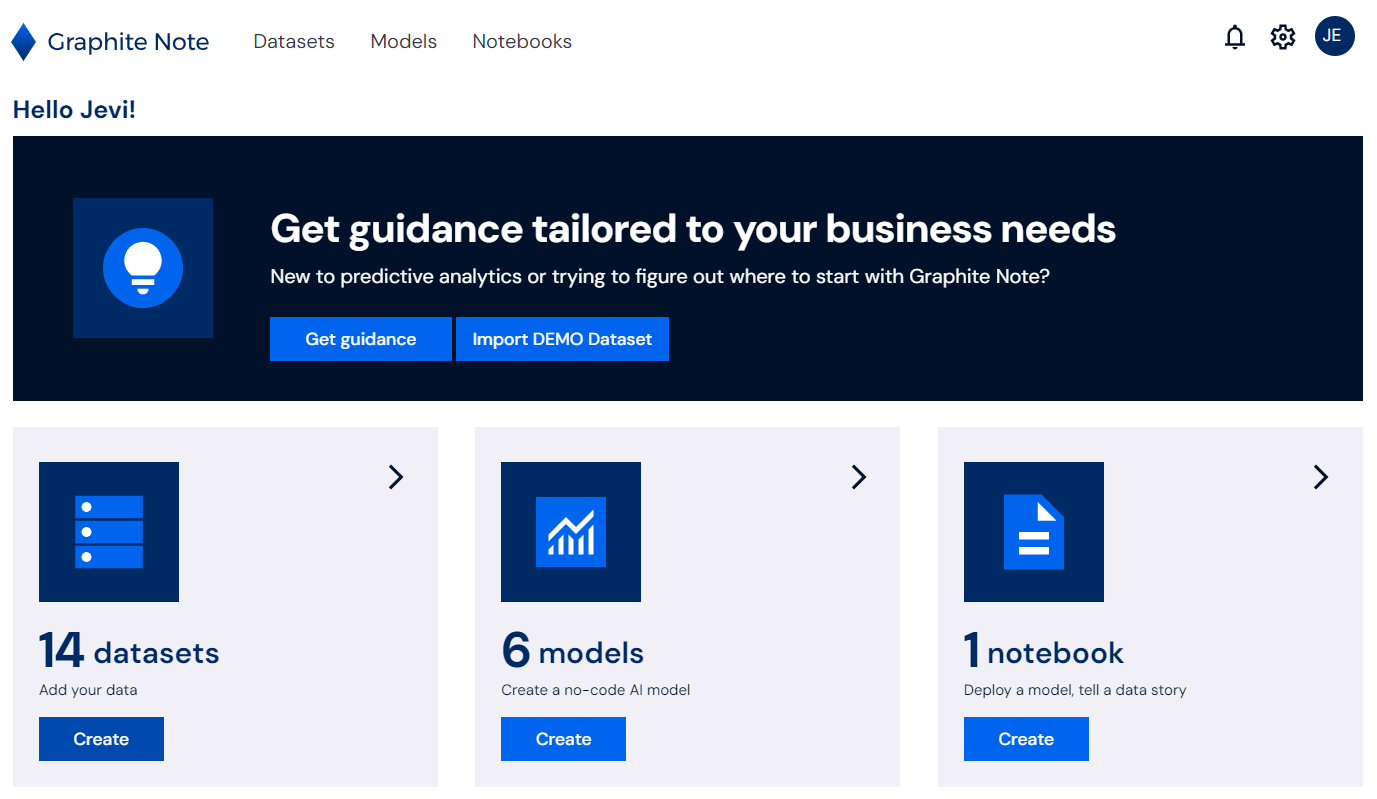
* Option 1: Go to the homepage and click on "Create" under Datasets.
* Option 2: From the datasets list, click on "New Dataset."
Option 1: Create Dataset using homepage
Option 2: Create Dataset from the Dataset List page
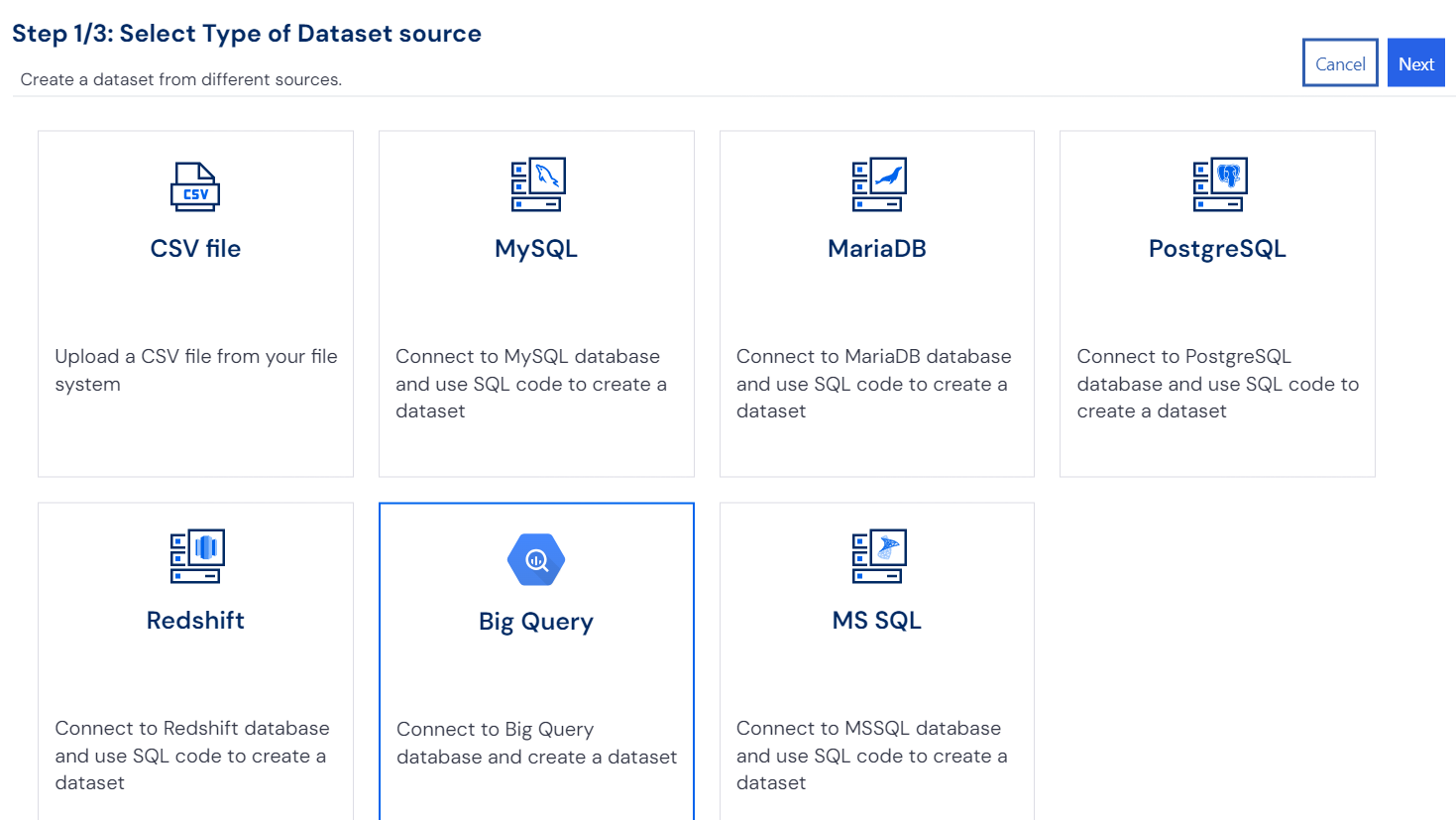
**2. Select Big Query**
* Choose "Big Query" as your dataset source and click "Next".
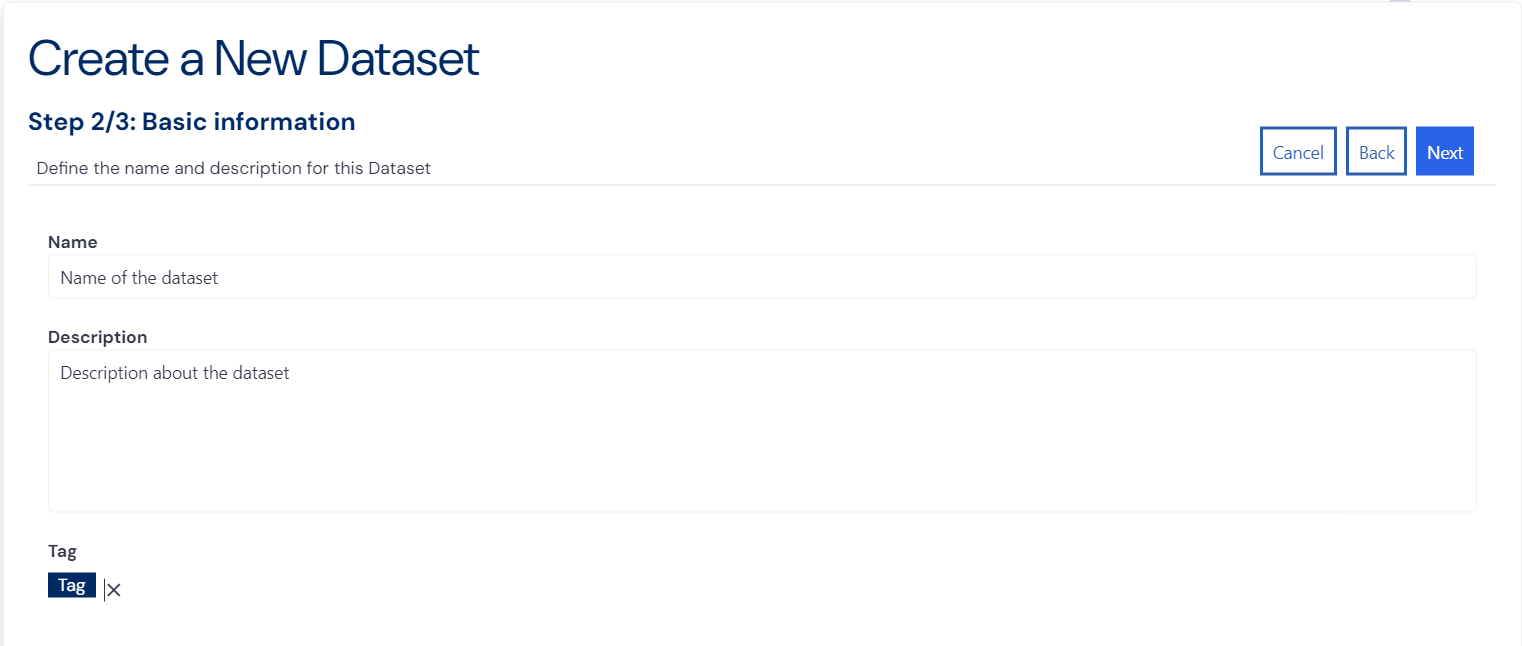
**3. Enter Dataset Information**
* Name: Provide a name for the dataset.
* Description: Add a short description of the data.
* Tags: Add tags for better organization.
* Click "Next" to proceed.
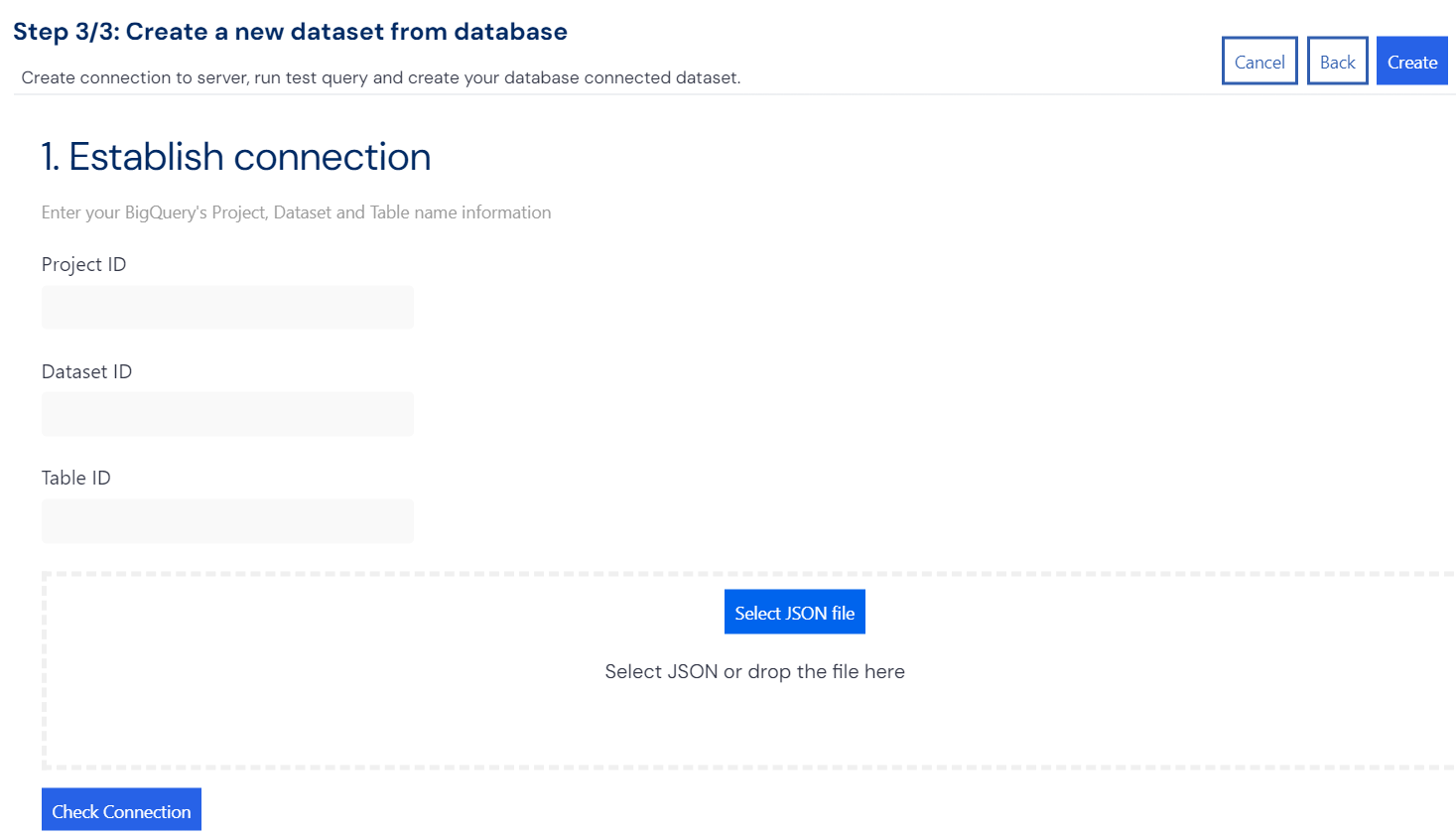
#### 4. **Configure Big Query Connection**
* **Project ID**: Enter your Google Cloud project ID.
* **Dataset ID**: Enter the Big Query dataset ID.
* **Table ID**: Enter the table ID if you want to import data from a specific table.
#### 5. Download JSON Key from BigQuery
To enable Graphite Note to access your BigQuery data, you'll need to provide a service account key in JSON format:
1. **Create a Service Account:**
* Navigate to the Google Cloud Console.
* Select your project or create a new one.
* Go to **IAM & Admin** > **Service Accounts**.
* Click on **+ CREATE SERVICE ACCOUNT**.
* Provide a name and description for the service account, then click **CREATE**.
2. **Grant Permissions:**
* Assign the necessary roles, such as **BigQuery Data Viewer** and **BigQuery Job User**. These roles allow the service account to view datasets and execute queries.
3. **Create Key:**
* In the service account list, click on the created service account.
* Go to the **Keys** tab and click **ADD KEY** > **Create new key**.
* Select **JSON** as the key type and click **Create**. This will download the JSON key file to your computer.
#### 6. Upload JSON Key to Graphite Note
1. **Access the Dataset Creation Page:**
* Return to the Graphite Note platform where you left off at the "Create a New Dataset" step.
2. **Upload JSON Key:**
* You will be prompted to upload the JSON key file. Click on **Upload JSON Key** and select the file you downloaded from the Google Cloud Console.
3. **Check Connection:**
* After uploading the JSON key, click **Check Connection** to ensure that Graphite Note can successfully connect to your BigQuery instance.
#### 7. Review data
Review the data and make any necessary adjustments:
* **Rename Columns:** Change column names if needed.
* **Change Data Types:** Adjust the data types of your columns as required.
* Click on the "Create" button to finalize and create your dataset.
#### Next Steps
Now that your data is imported and prepared, you can proceed to create a model without writing any code. Simply go to the [Models](https://app.gitbook.com/o/tMDHUVlAYCj1y8ercRu6/s/gnR78y9L7FDWeb4jdvdW/models/introduction) and follow the steps to build and deploy your model using Graphite Note's intuitive interface.
---
# Agent Instructions
This documentation is published with GitBook. GitBook is the documentation platform designed so that both humans and AI agents can read, navigate, and reason over technical content effectively. Learn more at gitbook.com.
## Querying This Documentation
If you need additional information that is not directly available in this page, you can query the documentation by asking a question.
Perform an HTTP GET request on the following URL with the `ask` and `goal` query parameters:
```
GET https://docs.graphite-note.com/graphite-note-documentation/datasets/data-sources/big-query-connector.md?ask=&goal=
```
`ask` is the immediate question: it should be specific, self-contained, and written in natural language.
`goal` is what the user is ultimately trying to achieve, the reason they need the answer. Sharing it helps GitBook give you a better, more relevant answer. A goal is most helpful when it describes the outcome the user wants rather than restating the question. For example, with `ask=how do I create an API token`, a goal like `automate deployments from our CI pipeline` lets GitBook tailor the answer to that use case.
The response will contain a direct answer to the question and relevant excerpts and sources from the documentation.
Use this mechanism when the answer is not explicitly present in the current page, you need clarification or additional context, or you want to retrieve related documentation sections.